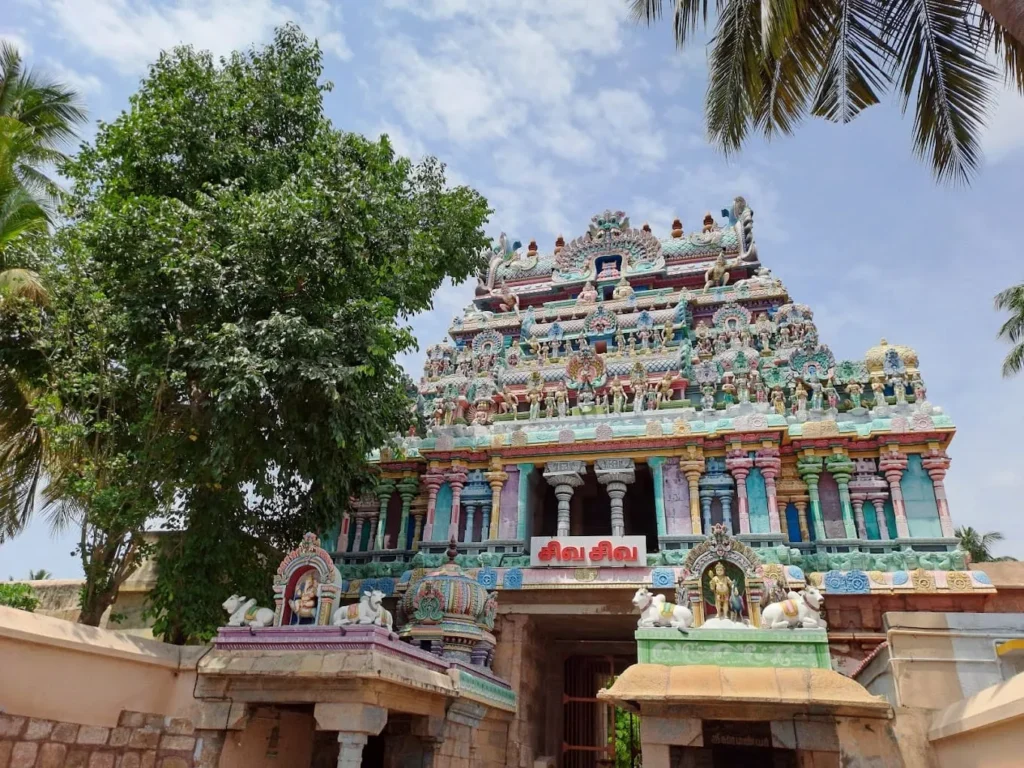
jambukeswarar temple trichy
Jambukeswarar temple trichy Jambukeswarar Temple, Thiruvanaikaval (also Thiruvanaikal, Jambukeswaram), is a famous Shiva temple in Tiruchirapalli (Trichy) district, in the state of Tamil Nadu, India. Though it is thought that this temple was built around 1,800 years ago by Kocengannan (Kochengat Cholan), one of the early Cholas.It is located near Srirangam, which has the famous Ranganathaswamy Temple. 5.2 km from Chatram bus stand, you can book Sriram Travels cabs to reach this Jambukeswarar Temple. The cost is also very affordable. Click to Call Sriram Travels. Thiruvanaikovil temple is one of the five major Shiva temples of Tamil Nadu (Pancha Bhoota Stalam), representing the Mahbhta, or five great elements; this temple represents the element of water. The sanctum of Jambukeshwara has an underground water stream, and in spite of pumping water out, it is always filled with water. It is one of the 275 Paadal Petra Sthalams where the deity’s glories have been sung by all four of the most revered Nayanars (Saivite Saints). The temple has inscriptions from the Chola period. Jambukeswarar Temple Timings Temple Visiting Timings: The best time to visit jambukeswara temple or thiruvanaikovil Morning 5:30 AM to 1:00 PM Eveing 3:00 PM to 8:30 PM Jambukeswarar Pooja Timings: Ushakkala Pooja: 6:30 AM to 7:30 AM Kaalasandhi Pooja: 8:00 AM to 8:45 AM Uchikkala Pooja: 11:00 AM to 12:00 PM Saayaraksha Pooja: 5:00 PM to 5:45 PM Ardhajama Pooja: 9:00 PM You can book a travel for reach out this jambuskeswara temple Jambukeswarar Temple History Once, Parvati mocked Shiva’s penance for the betterment of the world. Shiva wanted to condemn her act and directed her to go to the earth from Kailasam (Shiva’s abode) to do penance. Parvathi, in the form of Akilandeswari, as per Shiva’s wish, found Jambu forest (Thiruvanaikoil) to conduct her penance. She made a lingam out of water from the river Cauvery (also called the river Ponni) under the Venn Naaval tree (the Venn Naaval tree on top of the saint Jambu) and commenced her worship. The lingam is known as Appu Lingam (Water Lingam). Siva at last gave darshan to Akilandeswari and taught her Siva Gnana. Akilandeswari took upadesa (lessons) facing east from Shiva, who stood facing west. There were two Siva Ganas (Siva’s disciples who live in Kailash): “Malyavan” and “Pushpadanta.” Though they are Siva Ganas, they always quarrel with each other and fight for one thing or another. In one fight, ‘Malyavan” cursed “Pushpadanta” to become an elephant on earth, and the latter cursed the former to become a spider on earth. The elephant and the spider came to Jambukeswaram and continued their Siva worship. The elephant collected water from the Cauvery River and conducted ablution to the lingam under the Jambu tree (Eugenia jambolana, the Java plum tree) daily. The spider built his web over the lingam to keep dry leaves from falling on it and direct sunlight from hitting it. When the elephant first saw the web, it mistook it for dust on a lingam. The elephant tore them and cleaned the lingam by pouring water, and the practise continued daily. The spider became angry one day and crawled into the trunk of the elephant and bit it to death, killing itself. Siva, in the form of Jambukeswara, moved by the deep devotion of the two, relieved them from the curse. As an elephant worshipped Siva here, this place came to be known as Thiru Aanai Kaa (thiru means holy, aanai is elephant, and kaa (kaadu) means forest). Later, the name “Thiruaanaikaa” became “Thiruvanaikaval” and “Thiruvanaikoil. As an outcome of having committed a sin by killing the elephant, in the next birth, the spider was born as King Kochengot Chola (kotchengannan cholan, meaning red-eyed king), who built 70 temples, and this temple is one of them. The account of the Cholas’ building seventy temples along with this temple is mentioned in Nalayira Divya Prabandham. Remembering his enmity with the elephant in his previous birth, he built the Siva Sannathi (sanctorum) such that not even a small elephant could enter. The entrance to the sanctorum of Jambukeshwara is only 4 feet high and 2.5 feet wide. There was a story behind the king’s red eyes: When he was in his mother’s womb, the palace astrologer predicted a sacred time to give birth to enable the newborn’s well-being. The queen went into labour early, before the time predicted by the astrologer. The queen, therefore, told the servant to hang her upside down for the time to come so that she could have a wise and virtuous son who could head the kingdom righteously. This waiting time inside the womb made the baby’s eyes red. After becoming king, he built the Jambukeswarar temple in Trichy for Siva and Goddess Akilandeswari in the name of Aanaikka (elephant protected); later, it changed to Thiruvanaikovil. Jambukeswarar Temple Benefits This Trichy Jambukeswarar Temple is a highly revered temple where Lord Shiva, along with his consort, is worshipped. Every year, devotees gather here in large numbers to watch Lord Jambunatha and Goddess Akilandeswari, and invoke their blessings. The several interesting beliefs behind this holy place add to its significance. The architecture further adds to its grandeur. Temples like these add to the beauty and culture of South India. The best time to visit Lord Shiva’s jambukeswara temples is during the Phalgun month, which falls roughly between March-April in trichy Architecture of Jambukeswara Temple (Thiruvanaikovil The massive outer wall covering the fifth precinct, known as the Vibudi Prakara, stretches over a mile and is two feet thick and over 25 feet high. According to legend, Shiva built the wall alongside the laborers. The fourth precinct contains a hall with 796 pillars and measures 2436 feet by 1493 feet. It also has a small tank fed by perpetual springs. The third enclosure is 745 feet by 197 feet and surrounded by a wall 30 feet high. This area has two gopurams (gateway towers) that are 73 and 100 feet tall, a coconut thoppu, and a small water tank. The second enclosure is 306 feet by 197, a gopuram 65 feet high and